How many corpses have been picked up quietly from under those blankets by ambulances and moved out of sight into the morgue?
Vancouverites have this image of themselves much touted in the media as being a generous and compassionate lot. Just witness all those charity runs. At our current rate of compassion and charitableness, the runners will soon require some lessons in leaping as they bypass that blanketed bulk, that dead or alive thing intruding upon their false sentimentalities on their sidewalks and in their streets.
Let's get real, shall we? Compassion for all. I believe it was a guy named Yeshua (Jesus) who said something along the lines of "Love thy neighbour as thyself."
That unconditional love includes our homeless neighbours, convenient or not.
THEOLOGY IS KING
Notice how issues of religious freedom and certain faith-based doctrines are now insinuating themselves into the American political mosaic? They’ve always been there, to wit their monetary slogan, “In God we Trust” but it’s convenient as hell for the Bush new World Order to use the religion of the evangelical Christians to advance his world agenda. Salting the Supreme Court with “conservative” (read traditional Christian) appointees will have the inevitable effect of changing the laws to suit his global designs; and embolden his doctrines which have justified wars and the financing of the military complex for decades.
When this globalizing is near its completion in terms of getting the corporate fixes in (mergers happening now at an alarmingly fast rate), we will find that theology is intimately woven into the fabric and constitution of this new global network.
Thoughtful individuals must act in voting booths everywhere to protect themselves from a from of religious fascism but also should insist on a Global Moral Creed to be put in place not only among governments but particularly among trans-national corporations who have been allowed to act criminally with regard to our global resources.
One God. One human family. We need to look out for each other’s well-being that a climate of goodness may soon become visible and thereafter shielded. Protecting the innocent and promoting goodness is all the theology anybody really needs. And it trumps every megacorporation and the wiles of any current president.
The Biological Setting for Joy
Scientists are discovering very interesting aspects of the mechanics of how we enjoy. Ever since they detected that certain hormones and endorphins were at work within us and could be stimulated to provide us with a sense of euphoria, they’ve been making some fascinating discoveries.
We’ll live longer if we are happy. Our bodies are less likely to become ill if we are disposed to a friendly nature. We are biologically inclined to share pleasure with each other and laughter is good for all that ails us. (Imagine the obvious boon of laughter where depression is concerned.)
Given that everything in the human body is designed to facilitate joy, would it not perhaps be wise to develop our social skills and our language to convey pleasure beyond “Cool!” and “Awesome!” to better reflect that faculty we have for bliss. Not only might we be better equipped to communicate our pleasure but we would be likely increasing our power to sustain our enjoyment on every level.
Sunday, April 24, 2005


The Joy Factory cont'd.
Neuropsychologists in Montreal have actually been hypnotizing nuns to have them relive their moments of religious ecstasy so as to describe them. Interesting that the nuns have reported that they can’t actually relive the experience but that they can recall it better. They can evoke a semblance of it. So even here in memory may we find ourselves disposed to enjoyment.
Scientists are becoming the pioneers of this age where the presence of a generous divine personality is coming into a theoretical frame. They are deciphering the meaning of human life and (soon to declare?) that the gist of that meaning is connected to enjoyment.
That we are born into an intelligent design is becoming radiantly and joyously clear.
Scientists are becoming the pioneers of this age where the presence of a generous divine personality is coming into a theoretical frame. They are deciphering the meaning of human life and (soon to declare?) that the gist of that meaning is connected to enjoyment.
That we are born into an intelligent design is becoming radiantly and joyously clear.
A BRIEF HISTORY OF HELL
Man has always been man. This intelligent design, this light into which each of us were cast existed as a life sustainer and form-giver long before each individual reading these words ever came into being. Life has a mind of its own. It is presumptuous of us in the extreme to imagine that the universe only came into existence when we were born. And to think that the only relevant universe came into being when we were born is another version of egomania and presumptuousness. And if you do believe that, don’t get married and don’t have children.

Hell cont'd.
That we are endowed with free will permits us to ignore the presence of the personality of the infinite. And stepping out of that mainstream of light and attempting to create one’s own isolated version of reality is endlessly tricky and ultimately (and constantly) futile. Momentary shots of pleasure, spurts in the dark, are about all one can anticipate when one is divorced from that light which provides the joy. The thrill one experiences when risking one’s life is the release of adrenaline which is equipping you to deal with a threatening circumstance and screaming at you to take note. Artificially jumpstarting these hormonal releases is akin to a form of gluttony, imitating the godlike and indiscriminate consumption of vast pleasures.
Funny thing about joy: it eludes control. Was not Buddha elucidating this point another way when he said, “Everything in moderation.”?
When we stop imitating God or pretending ourselves to be the infinite personality responsible for love and joy in this world, then perhaps we will position ourselves to enjoy the visibility of something divine at work.
Man needs to regain his perspective of life and enjoyment. By many successive generations of lapsing into isolationism and stunted growth our very mechanisms to know joy are being genetically altered, as in diminished.
The enlightened man and emancipated societies of long ago existed in a dimension which did not require record-keeping so take heart, our brief history of hell can be measured by the relatively new act of marking our histories by the glories of war. We can pull out of this malaise soon, especially given the recent efforts of noble scientists who are reading a different and staggeringly more beautiful rendition of the human code.
Besides, our genetic memories incline us to this light. Just ask those nuns in Montreal.
All Eyes Agog on
Horrorscopes
By Ms Urble
Funny thing about joy: it eludes control. Was not Buddha elucidating this point another way when he said, “Everything in moderation.”?
When we stop imitating God or pretending ourselves to be the infinite personality responsible for love and joy in this world, then perhaps we will position ourselves to enjoy the visibility of something divine at work.
Man needs to regain his perspective of life and enjoyment. By many successive generations of lapsing into isolationism and stunted growth our very mechanisms to know joy are being genetically altered, as in diminished.
The enlightened man and emancipated societies of long ago existed in a dimension which did not require record-keeping so take heart, our brief history of hell can be measured by the relatively new act of marking our histories by the glories of war. We can pull out of this malaise soon, especially given the recent efforts of noble scientists who are reading a different and staggeringly more beautiful rendition of the human code.
Besides, our genetic memories incline us to this light. Just ask those nuns in Montreal.
All Eyes Agog on
Horrorscopes
By Ms Urble
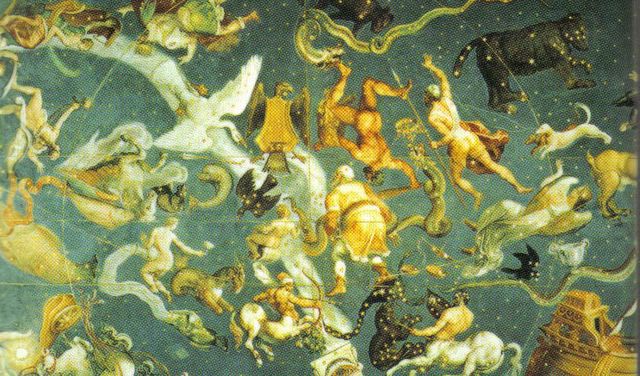
Read at your own risk
ARIES
The prophet in you spies money is on the horizon and the lover in you sees romance is just around the corner! The skeptic in you says “Tread lightly…” and a bird in hand is better than no bush at all and with your sun in the house of spent dreams, take the path of least resistance and sleep on it. Besides, The Price is Right is next.
TAURUS
Beware of cloying friends this week. Your companion stars are in retrograde and you’re not up to heavy lifting of the long-suffering. Post a note on your door to advise all to merrily go elsewhere. Gay west end Tauruses may execrise discretion and have empathy for lonely, adolescent torsos. But go easy. Celestial Broncos are in heat this week.
GEMINI
Charge those twin engines and slather on the grease! Your mooning is in retrofit and you’re roaring along on steel rims. This is one week you can feel two-fisted confidence about your every little gesture. Half wits find you irresistible and your engine is in gear for four on the floor. And with that extra roll of construction plastic, you’re good to go.
CANCER
Thou lingereth too long on thou moniker. Soon, thou calleth hoary death to do thy bidding on thy name. And if of meagre mind thou find the deity, “FatChance’” may well escape thy next mother’s lips. Hail Cancer!
LEO
Take charge of your agenda this week and fear not the wrath of Mommy. Your half moon is in your Dad’s outhouse and your celestial siblings are rubbing each other the wrong way so this fortuitous diversion provides your chance to be in command of all the dinky toys in the sandbox. Thump anyone who tells you otherwise. And to acquaint yourself with that head-in-sand situation, join the Davie Street Business Improvement asssociation on the next full moon.
VIRGO
Just when you thought you were being overlooked, a scorpio your way cometh. Tickle its belly underneath the fur and use a moist rag to rub across its forehead for optimal exposure to sunstroke. Brag the rest of the week about your technique. No one else will.
LIBRA
After last week’s run-ins you’re feeling a little overexposed to the perverted morés of a lost civilization. Pray to Zeus and ThoreauAster to have your moon illuminated from behind. Then, on the cusp of green tea leaves, ride your broomstick to the nearest Exxon and demand an overhaul with plenty of grease. For clarity, refer to H Greenspan’s prognostications.
SCORPIO
You have a date with Virgo. No use putting her off. She’s been well-briefed. Wiggle your best. You might trim your fur.
SAGITTARIUS
Someone up there loves you, sagging and hilarious as that is. Renovate your umbrella and ask Julie Andrews for tips on obsequiousness. But do not attempt singing. It’s already scheduled to rain on Scorpio’s parade.
CAPRICORN
Don’t envy Libra’s broom . After all, you carry the talking stick. Ask Big Bear Rubbing Butt for a favourable weather report to figure on which day would be auspicious to tap your stick lightly three times on one of the heads of the swamp toads and then ask reverentially for permission to take ownership of Julie’s chimney relics. Then using sacred stick to croak the presumptuous toad, dice and serve.
AQUARIUS
Are we there yet? Chorus please (again). “When the moon is in …”
PISCES
Your soul mate is in town. Stay home. Try not to think about her. They’re never what you expect. Don’t you always feel somehow more tawdry, trivialized by the experience? Is your soul really that petty? You see? If Einstein was right, “We are who we are in relation to other people,” and that’s your soul mate then you’re in serious trouble. For favours from hoary death, cue behind cancer.
LightStream Excerpt
(from Chapter 2, see book cover below in Issue four.)
By the time Devon was climbing onto the bus, he had decided he would indeed let Sarah in on his little secret. So despite the crowded and sweltering conditions on the old bus, having managed a seat next to the driver, Devon was oblivious to the discomfort as his mind was enjoying its quiet thrill of anticipation. If not today, surely this week he would have in his possession the precious scroll of Jo Asaph.
In his four years as Assistant to Father Gregory Atkins, he had felt like a secret agent, a mole doing his clandestine work to betray his cohorts, to undermine everything for which they were striving over the years. And while the outcome of his private travails may indeed have a devastating impact not only on the credibility of his immediate co-workers and Atkins but on the very tenets of the Mother Church itself, he did not feel like a traitor. He was a student of the truth and his researches were driven by his desire for knowing, and damn the consequences. Truth would set its own balance and woe to those who were desperately clinging to conventions and dogma when defied by words of light.
Devon never knew just how much his fellow translators were involved in what he viewed as a cover-up of the real significance of the Dead Sea Scrolls, so he wasn’t really fearful or paranoid of Catholic agents lingering in dark corridors counter-spying on him. He had slyly concurred with his immediate bosses in their interpretive shenanigans and thus gained their trust completely. This ruse allowed him to pursue his own translations and researches covertly. While the existence of the scroll of Jo Asaph had been conveniently dismissed by Atkins et al as being a fabrication, or just another lost needle in the scriptural haystack, Devon Baird had come across references and cross references which led him to make the one key discovery: the approximate whereabouts of the cave which housed it.
For two years on his summer breaks, he searched in vain for the entrance to this cave reportedly marked by the family crest of Jo Asaph - three spheres of different sizes like three suns at different points of ascension. This marking, he believed, would have been carved on a rock or in a tree to denote the location of the cave site. What he found on the third day of his labors last week were three boulders somewhat unnaturally protruding from a rock cliff between the two other caves. It was in those caves the scrolls which alluded to a House of Jo Asaph were discovered. He believed that these three boulders, each of different size but of what appeared to be of a man-made roundness, must signal the site. In his bag he was carrying the crowbar and chisels he thought would suffice to dislodge the smaller of the boulders, rendering a wide enough hole to permit him entrance.
His musings were interrupted by the driver’s query, “When you gonna take a day off, Father? Every day you go digging. You call that taking a holiday?”
“I enjoy it, Ben. It’s good for me, this work. I’m sweating all that beer off.”
“You’re obsessed, Dr. Baird. Obsessed. Besides, on a day like this, even Jeshua would be drinking cold beer. What are you looking for out there? Haven’t those Bedouins just about picked those caves clean?”
“It’s a wonderful site, Ben. Very intelligently designed - waterways and sanctuaries, butcher houses and bakeries. Who would have thought, just looking at the terrain, such a forbidding area could have housed such a community?” A good, evasive answer thought Devon, and he noted the enthusiasm in his own voice. His life was indeed becoming fun.
“True enough. True enough. A remarkable people those Essenes. I’ve read a little myself you know. When are you going to publish something yourself, Father? I’ll buy a copy. That way I can let you do all the work. I’ll just read about it in my air conditioned study.”
“Fair enough, Ben,” and Devon couldn’t resist adding, “Keep your eyes peeled. Very soon, I’ll be publishing my letters. I think a lot of people may find them interesting.”
“Really, Father. Okay, I’ll do that.”
The bus was pulling into Qumran.
“Coming back on the 6:15, Father?”
“Yes, Ben. Will you be driving?”
“That’s my last run. See you then… and good luck Father.”
“God bless you, Ben.”
“Shalom, Father.”
As the bus clattered away and the sand clouds settled, the Jesuit explorer surveyed the scene. Three Bedouin tents, the nearest was Jafaar’s, a man whom he had hired last summer and who was a thief. He tried to end the association with a semblance of civility but Jafaar’s suspicious mind and blatant greed led him to accuse Devon of cutting him out of the imagined wealth he so desperately sought in these ancient caves. Scroll looting was his profession and in Jafaar’s mind Baird was onto something. Devon was forced to avoid him altogether. Now his tent was the nearest and as luck would have it, the Arab would have to pick today to stake his claims. If a heart could sink, Devon’s was bottom feeding.
The Dead Sea sat complacently blue, undeterred by millenniums of conflict on its banks… offering no shelter on its even shores of sand, pebble and rock.
‘Now, slip away, slip away,’ thought Devon. ‘No time for ruminations! Head uphill onto the winding paths. Move away before Jafaar can spot me.’
He began his ascent and as he continued to climb, his mind began to race along fearful tracks counting the ways he could fail. His heart was beating rapidly, pounding excited blood back into his nightmarish specters of disaster. He was bringing on an anxiety attack and he knew it and this frightened him even more. He was becoming hesitant, disoriented. As soon as he found a shady spot, he unloaded the weight off his back and began breathing with a practiced deliberateness - through the nose and out the mouth. Through the nose and out the mouth. Through the nose and out the mouth. Again that day he prayed, “Help me Father. Help me. Give me your strength. Give me your strength, Father. Help me.”
The shade, the rest and the prayer contributed to his becoming calmer and he allowed ten minutes to pass before embarking again on his climb and not until after a healthy swig of his lukewarm, bottled water.
He began again to wonder if he could pull this off by himself. Maybe it would be better to wait. Maybe he should ask Sarah Negev to help him. His confidence was eroding as he began to look for another rest stop, on a flat of ground somewhere off the incline. He decided to proceed to where he stashed his flashlight and canteens on his previous trip. By the time he got there, he was sopping with salty sweat pouring into his eyes, and cold with fear. His first thought was to rest and then return to Jericho, and this thought and the fact that he had this option relaxed his mind some. He guzzled more water, emptying the first quart on his face and over his head. Regaining his composure, he again considered the avenue of retreat. He could any time, and he was feeling better now so why not continue?
The fear of an anxiety attack had greatly diminished – a stupid memory of a moment of weakness. Such a discovery demands courage and single-minded will, he thought. He allowed a few more moments to pass and newly resolved, began again his ascent.
He felt stronger on this last ascent. Determination and resolve of purpose had gripped him and the word ‘obsessed’ seemed correct now. Right now, God alone knew his courage. Nothing and nobody would steal from him the glory of this task accomplished. His name, BAIRD, would be hailed and remembered for centuries into this new millennium, the Age of Aquarius, as the bringer of the water, the truth to pour out to the thirsty. And his work he would dedicate to the loving memory of his wife Janine and his brother, Marty, and at last Devon Baird would be free.
It was 12:30 p.m. before he reached the three rocks and while his spirit remained most keen, uninterrupted now by doubt, and enlivened by his arrival, his body had reached its limit. He had time, he thought, to rest for a good half hour before tackling the middle rock, the smallest of the lot. For the first ten minutes he lay flat on his back, his head propped by the packsack. And the last 20 he used for lunch, devouring the sandwiches, the vegetables, the O.J. and half the rest of his second water bottle there in the shade of the north end of the cliff slope. Once he had the rock out of the way his heavy labors should be over. He had explored caves hereabouts and while one had to move with alertness, he hadn’t found it heavy work. And the descent would be breezy compared to the climb and if indeed his discovery were to be today, he’d fly downhill and be making very merry with Sarah at the Palms in no time. On this thought, he withdrew the crowbar and mallet from his pack.
He examined the rock’s face meticulously with particular attention to its outline where it met the wall. Indeed it looked placed. He lodged the point of the crowbar at the peak of the rock, thinking if it were to give it would roll outward at an angle away from him, as he was standing off some, leaning toward it. The rock itself was as high as his hip, perfectly round, but it’s face potted with small crater-like depressions. Sandstone, likely, he surmised. He pounded on the butt of the crowbar with his mallet and with little resistance the crowbar sunk an inch or so.
“That was easy,” he remarked aloud. He braced himself and pounded again and this time the crowbar went right through making a small aperture, and to Devon’s astonishment, out of it exploded an extremely loud cry. One sound emitting at great volume, Aye. Simultaneously, gasses erupted through the aperture spewing a terrible stench and Baird knew right away they were toxic. He fell back leaving the crowbar stuck in the rock wall while the sound and gasses continued to violently eject themselves from inside the cave. He cupped his ears and turned away from the specter. It scared the hell out of him. That blasted sound seemed to last an infinity and he could still hear the gasses blowing out of the hole. From that, he felt no danger, as the open air and slight breeze were diffusing the toxins. It was that piercing sound that knocked him over. He loosened his hands from about his ears just enough to hear the subsiding of the cry and detected in it a tone, a base tone, low and sure, as if authoritative, as if someone had only one chance throughout their lifetime to speak but one word and this was it. He waited a moment for the plume of dirty air escaping the cave to thin until nothing was left to see or hear except a crowbar sticking out of a rock wall on a steep hillside in the desert, and the sound of his own tentative movements.
He touched the crowbar. It felt greasy - from the gasses, he expected. He sniffed his hand and scowled at the putrid smell. He took his hanky to wipe his hand and the realization he had just tapped into an ancient cave began to register. His heartbeat steadied and he picked up his mallet and readied for another strike. He hammered the butt of the crowbar again. This time the shriek was louder, different, and again unexpected. Baird bolted away from the rock at a dead run. When he rounded the wall and was outside the immediate earshot of the blast, he sat on his haunches, panting in fear and disbelief. ‘What in God’s name is that?’ he wondered.
His fear was balanced by his knowing that he had penetrated to the inside of the cave. All he had to figure on now was that terrible sound and how to contend with it. It seemed the bloody thing was going to scream at him every time he punctured a hole around the rock. He peeked around the corner and saw again the crowbar projecting outward at a 45 degree angle from the rock. No sound now. No gasses. He crept forward. The rock rolled out as though of its own will. One plop, and there it was sitting on the pathway, the crowbar having been dislodged, leaning on the rock like a workman at rest.
“My God! I’ve done it!” He ran to see the hole and smelled that musty air and stepped back instinctively; but there it was, the door was open. The entrance descended at a fairly steep angle. He was going to need his rope. With the rope over his neck, flashlight in hand and shoulder bag to his left side, he ducked into the cave. Hunched over at first, the further along he went the narrower and steeper it got until he was crawling on his belly inches at a time. He was becoming concerned about his ability to engineer crawling back when the floor of the cave evened and the height of it expanded. He could still make out the light at the entrance behind him some 60 feet or so, and proceeded cautiously forward on his hands and knees until he reached an edge. Past this edge was an abyss described only by the sound of water cascading somewhere in the depths of this black hall, some unknown distance below.
This was curious. This was a cavern of unusual dimensions. The beam of his flashlight dissipated when he pointed it downward and to each side, his left and right, it traced the inside walls until again it dimmed from sight.
Laying on his stomach, he swept his right hand across the stone floor, found a small rock and tossed it out ahead of him. He heard one crack of it soon after, possibly ricocheting or perhaps landing. It was deceiving. Did it land? If it did, the floor of the cavern wasn’t too far. His rope would do. If it ricocheted off a side wall or a protrusion of sorts, when did it land and why didn’t he hear it land?
He felt for another stone, repeated the throw, except this time threw it out farther. Same thing. Crack and then nothing. He pointed the flashlight toward the sound and this time he could make out an outcrop of rock establishing a platform about 15 feet below him. He wondered still where the actual cave floor was. He would have to descend to this lower platform for another look. He thought about using the rope to ease himself down but realized he may need the entire length of it to access the floor from the platform. He probed the wall sides again and spotted some crevices and jutting stone pieces which he figured he could scale and which led onto the platform. He realized it would be necessary to pack away his flashlight in order to use both his hands for this first descent. With the rope still about his neck he crept over to the side wall. Very slowly, very deliberately, feeling every step, concentrating on his every move, breathing fully, rhythmically, he succeeded in descending to the platform in absolute darkness.
He was unusually calm. He noted the stream was louder now as he retrieved his flashlight and began peering again for a floor below. It was frustratingly similar to what he had seen from above him – almost nothing. Just the concave sides again. He picked up another stone and from his kneeling position and leaning over the edge, let it go. This time he heard a faint landing, and one more bounce. After a moment, he thought he could make out a floor. Perhaps his eyes were getting used to the darkness below or his eyes were playing tricks, hoping as he was to see a floor. Five minutes had passed on the platform before he acknowledged his only line of action was to ease himself down with the rope secured on the platform. He began to look for something to tie the rope to.
This was becoming worrisome as he really had no idea what a professional climber might do in this circumstance. What do climbers affix their ropes to? Finally, he felt the jagged rock edge of a small outcrop and pulled hard on it, kicked it and determined it was solid. There was enough space for the rope and he tied it firmly. He tied a knot at the end of the rope and hooked it into his belt. He threw the rest of the rope over the side and didn’t want to admit to himself he didn’t hear any of it land. He sat down a few feet away from the ledge and pondered his predicament, the endless cascade of a stream somewhere below his only company.
At the top of his lungs he yelled at the abyss, “Hey you!” And back the two syllables came from across the cave. The purity of the echo was amusing to Devon. As he sat there in the minor illumination of his flashlight, he wondered how long it had been since these walls had echoed the sounds of human voices. If he could gauge by the findings in the other caves of Qumran, probably about 2100 years.
Once again his options were obvious. Retreat. Call it a day. He knew he could climb back to his first lookout and exit the site. He flashed on his watch: 1:15. He had a good four hours to work here if he chose. If only he knew just how far down that bloody floor was. Not knowing certainly heightened the risk and intensified his agitation.
He crawled over to the edge, lay down on his stomach and with his head and shoulders out into the abyss and his hands cupped around his mouth, called out, “Hey you.” He waited. “Hey you,” came back, after a bit. A bit too long, he worried. “Hey Joseph are you down there?” And “Hey Joseph are you down there?” returned. This time the “bit” seemed like just more than a couple of seconds and not being an expert on echoes, or the speed of sound related to the distance from the caller to where the echo originated, and the time it took to get back to him etc., he remained flummoxed. To hell, he thought. Go down. Get it and get out. Simple enough.
He got up and paced back and then around, his flashlight leading the circle he was following, as he dragged the rope about from his waist. He unclasped his leather belt and re-hooked the rope. He looped the loose rope around his left forearm and the same with his right. He clasped the flashlight to his belt, remaining lit. He began his descent. His heart began to pound as he realized the danger. Then after only three steps down the face of the wall his left foot landed on solid rock. Greatly relieved, his right foot landed and he stood upright, probing with his left foot the width of this rock ledge – about a foot and a half and he braced to go out again. The shoulder bag was secure across his neck and occasionally his flashlight yielded some forms. He was descending step by step, sometimes requiring the full tension of the rope; sometimes stomach leaning on the damp rock face; the stream getting closer, his spirit enlivening. He was checking the whole way down to feel how awkward it might be to get back up and so far so good, he reasoned. He landed again on an edge enabling him to stand once more, and rest his arms. This time he felt a loose stone under his right foot and kicked it off. He heard the landing and it seemed the sound was much closer and most welcome. “Thank God! Thank you, God! Thank you!” He pushed out, taut on the rope, the tips of his boots pushing off the wall. Six more pushes and he landed again. It wasn’t the floor, too narrow. He realized this is where the little rock had landed. He placed his full body weight on the edge to rest again. Then it fell out from under him. He lost his grip on the rope temporarily, and could feel his torso and legs scraping hard against the rock face.
The invisible river thrashed on as though indifferent to the plight of the dangling priest.
For more excerpts and reviews see www.lightstreambook.com
For inquiries re LightStream, contact harry@lightstreambook.com
The prophet in you spies money is on the horizon and the lover in you sees romance is just around the corner! The skeptic in you says “Tread lightly…” and a bird in hand is better than no bush at all and with your sun in the house of spent dreams, take the path of least resistance and sleep on it. Besides, The Price is Right is next.
TAURUS
Beware of cloying friends this week. Your companion stars are in retrograde and you’re not up to heavy lifting of the long-suffering. Post a note on your door to advise all to merrily go elsewhere. Gay west end Tauruses may execrise discretion and have empathy for lonely, adolescent torsos. But go easy. Celestial Broncos are in heat this week.
GEMINI
Charge those twin engines and slather on the grease! Your mooning is in retrofit and you’re roaring along on steel rims. This is one week you can feel two-fisted confidence about your every little gesture. Half wits find you irresistible and your engine is in gear for four on the floor. And with that extra roll of construction plastic, you’re good to go.
CANCER
Thou lingereth too long on thou moniker. Soon, thou calleth hoary death to do thy bidding on thy name. And if of meagre mind thou find the deity, “FatChance’” may well escape thy next mother’s lips. Hail Cancer!
LEO
Take charge of your agenda this week and fear not the wrath of Mommy. Your half moon is in your Dad’s outhouse and your celestial siblings are rubbing each other the wrong way so this fortuitous diversion provides your chance to be in command of all the dinky toys in the sandbox. Thump anyone who tells you otherwise. And to acquaint yourself with that head-in-sand situation, join the Davie Street Business Improvement asssociation on the next full moon.
VIRGO
Just when you thought you were being overlooked, a scorpio your way cometh. Tickle its belly underneath the fur and use a moist rag to rub across its forehead for optimal exposure to sunstroke. Brag the rest of the week about your technique. No one else will.
LIBRA
After last week’s run-ins you’re feeling a little overexposed to the perverted morés of a lost civilization. Pray to Zeus and ThoreauAster to have your moon illuminated from behind. Then, on the cusp of green tea leaves, ride your broomstick to the nearest Exxon and demand an overhaul with plenty of grease. For clarity, refer to H Greenspan’s prognostications.
SCORPIO
You have a date with Virgo. No use putting her off. She’s been well-briefed. Wiggle your best. You might trim your fur.
SAGITTARIUS
Someone up there loves you, sagging and hilarious as that is. Renovate your umbrella and ask Julie Andrews for tips on obsequiousness. But do not attempt singing. It’s already scheduled to rain on Scorpio’s parade.
CAPRICORN
Don’t envy Libra’s broom . After all, you carry the talking stick. Ask Big Bear Rubbing Butt for a favourable weather report to figure on which day would be auspicious to tap your stick lightly three times on one of the heads of the swamp toads and then ask reverentially for permission to take ownership of Julie’s chimney relics. Then using sacred stick to croak the presumptuous toad, dice and serve.
AQUARIUS
Are we there yet? Chorus please (again). “When the moon is in …”
PISCES
Your soul mate is in town. Stay home. Try not to think about her. They’re never what you expect. Don’t you always feel somehow more tawdry, trivialized by the experience? Is your soul really that petty? You see? If Einstein was right, “We are who we are in relation to other people,” and that’s your soul mate then you’re in serious trouble. For favours from hoary death, cue behind cancer.
LightStream Excerpt
(from Chapter 2, see book cover below in Issue four.)
By the time Devon was climbing onto the bus, he had decided he would indeed let Sarah in on his little secret. So despite the crowded and sweltering conditions on the old bus, having managed a seat next to the driver, Devon was oblivious to the discomfort as his mind was enjoying its quiet thrill of anticipation. If not today, surely this week he would have in his possession the precious scroll of Jo Asaph.
In his four years as Assistant to Father Gregory Atkins, he had felt like a secret agent, a mole doing his clandestine work to betray his cohorts, to undermine everything for which they were striving over the years. And while the outcome of his private travails may indeed have a devastating impact not only on the credibility of his immediate co-workers and Atkins but on the very tenets of the Mother Church itself, he did not feel like a traitor. He was a student of the truth and his researches were driven by his desire for knowing, and damn the consequences. Truth would set its own balance and woe to those who were desperately clinging to conventions and dogma when defied by words of light.
Devon never knew just how much his fellow translators were involved in what he viewed as a cover-up of the real significance of the Dead Sea Scrolls, so he wasn’t really fearful or paranoid of Catholic agents lingering in dark corridors counter-spying on him. He had slyly concurred with his immediate bosses in their interpretive shenanigans and thus gained their trust completely. This ruse allowed him to pursue his own translations and researches covertly. While the existence of the scroll of Jo Asaph had been conveniently dismissed by Atkins et al as being a fabrication, or just another lost needle in the scriptural haystack, Devon Baird had come across references and cross references which led him to make the one key discovery: the approximate whereabouts of the cave which housed it.
For two years on his summer breaks, he searched in vain for the entrance to this cave reportedly marked by the family crest of Jo Asaph - three spheres of different sizes like three suns at different points of ascension. This marking, he believed, would have been carved on a rock or in a tree to denote the location of the cave site. What he found on the third day of his labors last week were three boulders somewhat unnaturally protruding from a rock cliff between the two other caves. It was in those caves the scrolls which alluded to a House of Jo Asaph were discovered. He believed that these three boulders, each of different size but of what appeared to be of a man-made roundness, must signal the site. In his bag he was carrying the crowbar and chisels he thought would suffice to dislodge the smaller of the boulders, rendering a wide enough hole to permit him entrance.
His musings were interrupted by the driver’s query, “When you gonna take a day off, Father? Every day you go digging. You call that taking a holiday?”
“I enjoy it, Ben. It’s good for me, this work. I’m sweating all that beer off.”
“You’re obsessed, Dr. Baird. Obsessed. Besides, on a day like this, even Jeshua would be drinking cold beer. What are you looking for out there? Haven’t those Bedouins just about picked those caves clean?”
“It’s a wonderful site, Ben. Very intelligently designed - waterways and sanctuaries, butcher houses and bakeries. Who would have thought, just looking at the terrain, such a forbidding area could have housed such a community?” A good, evasive answer thought Devon, and he noted the enthusiasm in his own voice. His life was indeed becoming fun.
“True enough. True enough. A remarkable people those Essenes. I’ve read a little myself you know. When are you going to publish something yourself, Father? I’ll buy a copy. That way I can let you do all the work. I’ll just read about it in my air conditioned study.”
“Fair enough, Ben,” and Devon couldn’t resist adding, “Keep your eyes peeled. Very soon, I’ll be publishing my letters. I think a lot of people may find them interesting.”
“Really, Father. Okay, I’ll do that.”
The bus was pulling into Qumran.
“Coming back on the 6:15, Father?”
“Yes, Ben. Will you be driving?”
“That’s my last run. See you then… and good luck Father.”
“God bless you, Ben.”
“Shalom, Father.”
As the bus clattered away and the sand clouds settled, the Jesuit explorer surveyed the scene. Three Bedouin tents, the nearest was Jafaar’s, a man whom he had hired last summer and who was a thief. He tried to end the association with a semblance of civility but Jafaar’s suspicious mind and blatant greed led him to accuse Devon of cutting him out of the imagined wealth he so desperately sought in these ancient caves. Scroll looting was his profession and in Jafaar’s mind Baird was onto something. Devon was forced to avoid him altogether. Now his tent was the nearest and as luck would have it, the Arab would have to pick today to stake his claims. If a heart could sink, Devon’s was bottom feeding.
The Dead Sea sat complacently blue, undeterred by millenniums of conflict on its banks… offering no shelter on its even shores of sand, pebble and rock.
‘Now, slip away, slip away,’ thought Devon. ‘No time for ruminations! Head uphill onto the winding paths. Move away before Jafaar can spot me.’
He began his ascent and as he continued to climb, his mind began to race along fearful tracks counting the ways he could fail. His heart was beating rapidly, pounding excited blood back into his nightmarish specters of disaster. He was bringing on an anxiety attack and he knew it and this frightened him even more. He was becoming hesitant, disoriented. As soon as he found a shady spot, he unloaded the weight off his back and began breathing with a practiced deliberateness - through the nose and out the mouth. Through the nose and out the mouth. Through the nose and out the mouth. Again that day he prayed, “Help me Father. Help me. Give me your strength. Give me your strength, Father. Help me.”
The shade, the rest and the prayer contributed to his becoming calmer and he allowed ten minutes to pass before embarking again on his climb and not until after a healthy swig of his lukewarm, bottled water.
He began again to wonder if he could pull this off by himself. Maybe it would be better to wait. Maybe he should ask Sarah Negev to help him. His confidence was eroding as he began to look for another rest stop, on a flat of ground somewhere off the incline. He decided to proceed to where he stashed his flashlight and canteens on his previous trip. By the time he got there, he was sopping with salty sweat pouring into his eyes, and cold with fear. His first thought was to rest and then return to Jericho, and this thought and the fact that he had this option relaxed his mind some. He guzzled more water, emptying the first quart on his face and over his head. Regaining his composure, he again considered the avenue of retreat. He could any time, and he was feeling better now so why not continue?
The fear of an anxiety attack had greatly diminished – a stupid memory of a moment of weakness. Such a discovery demands courage and single-minded will, he thought. He allowed a few more moments to pass and newly resolved, began again his ascent.
He felt stronger on this last ascent. Determination and resolve of purpose had gripped him and the word ‘obsessed’ seemed correct now. Right now, God alone knew his courage. Nothing and nobody would steal from him the glory of this task accomplished. His name, BAIRD, would be hailed and remembered for centuries into this new millennium, the Age of Aquarius, as the bringer of the water, the truth to pour out to the thirsty. And his work he would dedicate to the loving memory of his wife Janine and his brother, Marty, and at last Devon Baird would be free.
It was 12:30 p.m. before he reached the three rocks and while his spirit remained most keen, uninterrupted now by doubt, and enlivened by his arrival, his body had reached its limit. He had time, he thought, to rest for a good half hour before tackling the middle rock, the smallest of the lot. For the first ten minutes he lay flat on his back, his head propped by the packsack. And the last 20 he used for lunch, devouring the sandwiches, the vegetables, the O.J. and half the rest of his second water bottle there in the shade of the north end of the cliff slope. Once he had the rock out of the way his heavy labors should be over. He had explored caves hereabouts and while one had to move with alertness, he hadn’t found it heavy work. And the descent would be breezy compared to the climb and if indeed his discovery were to be today, he’d fly downhill and be making very merry with Sarah at the Palms in no time. On this thought, he withdrew the crowbar and mallet from his pack.
He examined the rock’s face meticulously with particular attention to its outline where it met the wall. Indeed it looked placed. He lodged the point of the crowbar at the peak of the rock, thinking if it were to give it would roll outward at an angle away from him, as he was standing off some, leaning toward it. The rock itself was as high as his hip, perfectly round, but it’s face potted with small crater-like depressions. Sandstone, likely, he surmised. He pounded on the butt of the crowbar with his mallet and with little resistance the crowbar sunk an inch or so.
“That was easy,” he remarked aloud. He braced himself and pounded again and this time the crowbar went right through making a small aperture, and to Devon’s astonishment, out of it exploded an extremely loud cry. One sound emitting at great volume, Aye. Simultaneously, gasses erupted through the aperture spewing a terrible stench and Baird knew right away they were toxic. He fell back leaving the crowbar stuck in the rock wall while the sound and gasses continued to violently eject themselves from inside the cave. He cupped his ears and turned away from the specter. It scared the hell out of him. That blasted sound seemed to last an infinity and he could still hear the gasses blowing out of the hole. From that, he felt no danger, as the open air and slight breeze were diffusing the toxins. It was that piercing sound that knocked him over. He loosened his hands from about his ears just enough to hear the subsiding of the cry and detected in it a tone, a base tone, low and sure, as if authoritative, as if someone had only one chance throughout their lifetime to speak but one word and this was it. He waited a moment for the plume of dirty air escaping the cave to thin until nothing was left to see or hear except a crowbar sticking out of a rock wall on a steep hillside in the desert, and the sound of his own tentative movements.
He touched the crowbar. It felt greasy - from the gasses, he expected. He sniffed his hand and scowled at the putrid smell. He took his hanky to wipe his hand and the realization he had just tapped into an ancient cave began to register. His heartbeat steadied and he picked up his mallet and readied for another strike. He hammered the butt of the crowbar again. This time the shriek was louder, different, and again unexpected. Baird bolted away from the rock at a dead run. When he rounded the wall and was outside the immediate earshot of the blast, he sat on his haunches, panting in fear and disbelief. ‘What in God’s name is that?’ he wondered.
His fear was balanced by his knowing that he had penetrated to the inside of the cave. All he had to figure on now was that terrible sound and how to contend with it. It seemed the bloody thing was going to scream at him every time he punctured a hole around the rock. He peeked around the corner and saw again the crowbar projecting outward at a 45 degree angle from the rock. No sound now. No gasses. He crept forward. The rock rolled out as though of its own will. One plop, and there it was sitting on the pathway, the crowbar having been dislodged, leaning on the rock like a workman at rest.
“My God! I’ve done it!” He ran to see the hole and smelled that musty air and stepped back instinctively; but there it was, the door was open. The entrance descended at a fairly steep angle. He was going to need his rope. With the rope over his neck, flashlight in hand and shoulder bag to his left side, he ducked into the cave. Hunched over at first, the further along he went the narrower and steeper it got until he was crawling on his belly inches at a time. He was becoming concerned about his ability to engineer crawling back when the floor of the cave evened and the height of it expanded. He could still make out the light at the entrance behind him some 60 feet or so, and proceeded cautiously forward on his hands and knees until he reached an edge. Past this edge was an abyss described only by the sound of water cascading somewhere in the depths of this black hall, some unknown distance below.
This was curious. This was a cavern of unusual dimensions. The beam of his flashlight dissipated when he pointed it downward and to each side, his left and right, it traced the inside walls until again it dimmed from sight.
Laying on his stomach, he swept his right hand across the stone floor, found a small rock and tossed it out ahead of him. He heard one crack of it soon after, possibly ricocheting or perhaps landing. It was deceiving. Did it land? If it did, the floor of the cavern wasn’t too far. His rope would do. If it ricocheted off a side wall or a protrusion of sorts, when did it land and why didn’t he hear it land?
He felt for another stone, repeated the throw, except this time threw it out farther. Same thing. Crack and then nothing. He pointed the flashlight toward the sound and this time he could make out an outcrop of rock establishing a platform about 15 feet below him. He wondered still where the actual cave floor was. He would have to descend to this lower platform for another look. He thought about using the rope to ease himself down but realized he may need the entire length of it to access the floor from the platform. He probed the wall sides again and spotted some crevices and jutting stone pieces which he figured he could scale and which led onto the platform. He realized it would be necessary to pack away his flashlight in order to use both his hands for this first descent. With the rope still about his neck he crept over to the side wall. Very slowly, very deliberately, feeling every step, concentrating on his every move, breathing fully, rhythmically, he succeeded in descending to the platform in absolute darkness.
He was unusually calm. He noted the stream was louder now as he retrieved his flashlight and began peering again for a floor below. It was frustratingly similar to what he had seen from above him – almost nothing. Just the concave sides again. He picked up another stone and from his kneeling position and leaning over the edge, let it go. This time he heard a faint landing, and one more bounce. After a moment, he thought he could make out a floor. Perhaps his eyes were getting used to the darkness below or his eyes were playing tricks, hoping as he was to see a floor. Five minutes had passed on the platform before he acknowledged his only line of action was to ease himself down with the rope secured on the platform. He began to look for something to tie the rope to.
This was becoming worrisome as he really had no idea what a professional climber might do in this circumstance. What do climbers affix their ropes to? Finally, he felt the jagged rock edge of a small outcrop and pulled hard on it, kicked it and determined it was solid. There was enough space for the rope and he tied it firmly. He tied a knot at the end of the rope and hooked it into his belt. He threw the rest of the rope over the side and didn’t want to admit to himself he didn’t hear any of it land. He sat down a few feet away from the ledge and pondered his predicament, the endless cascade of a stream somewhere below his only company.
At the top of his lungs he yelled at the abyss, “Hey you!” And back the two syllables came from across the cave. The purity of the echo was amusing to Devon. As he sat there in the minor illumination of his flashlight, he wondered how long it had been since these walls had echoed the sounds of human voices. If he could gauge by the findings in the other caves of Qumran, probably about 2100 years.
Once again his options were obvious. Retreat. Call it a day. He knew he could climb back to his first lookout and exit the site. He flashed on his watch: 1:15. He had a good four hours to work here if he chose. If only he knew just how far down that bloody floor was. Not knowing certainly heightened the risk and intensified his agitation.
He crawled over to the edge, lay down on his stomach and with his head and shoulders out into the abyss and his hands cupped around his mouth, called out, “Hey you.” He waited. “Hey you,” came back, after a bit. A bit too long, he worried. “Hey Joseph are you down there?” And “Hey Joseph are you down there?” returned. This time the “bit” seemed like just more than a couple of seconds and not being an expert on echoes, or the speed of sound related to the distance from the caller to where the echo originated, and the time it took to get back to him etc., he remained flummoxed. To hell, he thought. Go down. Get it and get out. Simple enough.
He got up and paced back and then around, his flashlight leading the circle he was following, as he dragged the rope about from his waist. He unclasped his leather belt and re-hooked the rope. He looped the loose rope around his left forearm and the same with his right. He clasped the flashlight to his belt, remaining lit. He began his descent. His heart began to pound as he realized the danger. Then after only three steps down the face of the wall his left foot landed on solid rock. Greatly relieved, his right foot landed and he stood upright, probing with his left foot the width of this rock ledge – about a foot and a half and he braced to go out again. The shoulder bag was secure across his neck and occasionally his flashlight yielded some forms. He was descending step by step, sometimes requiring the full tension of the rope; sometimes stomach leaning on the damp rock face; the stream getting closer, his spirit enlivening. He was checking the whole way down to feel how awkward it might be to get back up and so far so good, he reasoned. He landed again on an edge enabling him to stand once more, and rest his arms. This time he felt a loose stone under his right foot and kicked it off. He heard the landing and it seemed the sound was much closer and most welcome. “Thank God! Thank you, God! Thank you!” He pushed out, taut on the rope, the tips of his boots pushing off the wall. Six more pushes and he landed again. It wasn’t the floor, too narrow. He realized this is where the little rock had landed. He placed his full body weight on the edge to rest again. Then it fell out from under him. He lost his grip on the rope temporarily, and could feel his torso and legs scraping hard against the rock face.
The invisible river thrashed on as though indifferent to the plight of the dangling priest.
For more excerpts and reviews see www.lightstreambook.com
For inquiries re LightStream, contact harry@lightstreambook.com
Sunday, April 17, 2005

Pierre Trudeau’s Last Interview
Last fall Jon Ferry, columnist for the Province newspaper, mused about how the world might need a kind of Global Charter of Responsibilities before too much more globalizing went on. He asked for ideas as to what that charter might mention.
I wrote to Mr Ferry to inform him that back in 1998 I met and interviewed Pierre Trudeau for my paper, The Nelson Village Voice, about precisely the need for this sort of document. Mr Trudeau informed me that he and other heads of state were then working on A Universal Declaration of Human Responsibilities and these former leaders were hopeful they could prevail on their country’s current leaders to adopt this creed. (Interesting to note that Mr Ferry ignored my letter, and after a brief canine sniff of that issue went on about grubbing for some other bones.)
Thoughtful readers may enjoy this true story of how Mr Trudeau permitted me to become the publisher of this important global document.
On the evening of March 31, 1998, I was informed in a hush-hush sort of way by an employee of the Heritage Hotel in Nelson that Mr Trudeau was staying there. Dashing back to my office I prepared the following letter:
“Dear Mr Trudeau,
A friend and fan of my little paper (a magazine of philosophy and social commentary delivered every two weeks to every home and business of Nelson) told me in a ‘secret’ way that you were here.
I am and have been a long time supporter of your thoughts and political courage (and was a ‘crowd marshal’ at Toronto City Hall in 1967 during your ‘philosophical’ speech. And I am hopeful that you might grant me a 30 minute interview that I may put to you questions of a philosophical nature, as in:
*do you believe you may have had a greater impact on your country and the community we live in had you remained a published intellectual , as opposed to becoming a full time politician?
*given the trend to establishing global currencies and free trade agreements, do you personally feel these arrangements will benefit the common (global) man?
*Is there a necessity to put in place (in writing) A Moral Imperative as in A Global Creed by which all countries, corporations, and religious fiefdoms must abide? (A loaded question, n’est-ce pas?)
These are the kinds of questions I would enjoy putting to you in person. I would happily agree to a half hopur limit of your time. Though I dare you to keep it under that.
As a former Catholic private school student (St Philip Neri, Toronto) I was dismayed to find no debating club at Downsview Secondary School in 1964. I organized it with Mr Larry Martinello (my history teacher) and our first guest speaker was Richard Needham of The Globe and Mail. Larry has since become the author of the history text taught in high schools throughout Ontario, and here I am, the author of a novel, and publisher of a neat little philosophy paper and a man of extreme interest in interviewing you.
What say you? I’m a block away from the heritage Hotel and can be there in a flash. Call me? I’ll keep checking my messages
Best wishes to you, sir, no matter your decision re this appeal.”
With that letter and two back issues of The Nelson Village Voice (one of which talked about the spirituality of children that I was especially hopeful Mr Trudeau might read) I approached my Heritage Hotel ‘mole’ and made the following pitch: “I’ve never asked for a favour from the hotel before and have spent at least $16,000 at Mike’s Place pub upstairs, so here’s my favour: Get this envelope to Mr Trudeau while he’s a guest here. I’ll be upstairs playing pool.”
I waited for a couple of hours then returned to the lobby, feeling a bit like a stalker. After a little while of pacing and being on the verge of calling it a night, in walked the former porime Minister and leader of this country for 15 years wearing a red ski jacket, seeming quite small, walking slowly and alone. I approached him and with camera bag, papers sticking out of my pocket, my fedora, pen in hand, I assumed he had a notion I was from the press.
I wrote to Mr Ferry to inform him that back in 1998 I met and interviewed Pierre Trudeau for my paper, The Nelson Village Voice, about precisely the need for this sort of document. Mr Trudeau informed me that he and other heads of state were then working on A Universal Declaration of Human Responsibilities and these former leaders were hopeful they could prevail on their country’s current leaders to adopt this creed. (Interesting to note that Mr Ferry ignored my letter, and after a brief canine sniff of that issue went on about grubbing for some other bones.)
Thoughtful readers may enjoy this true story of how Mr Trudeau permitted me to become the publisher of this important global document.
On the evening of March 31, 1998, I was informed in a hush-hush sort of way by an employee of the Heritage Hotel in Nelson that Mr Trudeau was staying there. Dashing back to my office I prepared the following letter:
“Dear Mr Trudeau,
A friend and fan of my little paper (a magazine of philosophy and social commentary delivered every two weeks to every home and business of Nelson) told me in a ‘secret’ way that you were here.
I am and have been a long time supporter of your thoughts and political courage (and was a ‘crowd marshal’ at Toronto City Hall in 1967 during your ‘philosophical’ speech. And I am hopeful that you might grant me a 30 minute interview that I may put to you questions of a philosophical nature, as in:
*do you believe you may have had a greater impact on your country and the community we live in had you remained a published intellectual , as opposed to becoming a full time politician?
*given the trend to establishing global currencies and free trade agreements, do you personally feel these arrangements will benefit the common (global) man?
*Is there a necessity to put in place (in writing) A Moral Imperative as in A Global Creed by which all countries, corporations, and religious fiefdoms must abide? (A loaded question, n’est-ce pas?)
These are the kinds of questions I would enjoy putting to you in person. I would happily agree to a half hopur limit of your time. Though I dare you to keep it under that.
As a former Catholic private school student (St Philip Neri, Toronto) I was dismayed to find no debating club at Downsview Secondary School in 1964. I organized it with Mr Larry Martinello (my history teacher) and our first guest speaker was Richard Needham of The Globe and Mail. Larry has since become the author of the history text taught in high schools throughout Ontario, and here I am, the author of a novel, and publisher of a neat little philosophy paper and a man of extreme interest in interviewing you.
What say you? I’m a block away from the heritage Hotel and can be there in a flash. Call me? I’ll keep checking my messages
Best wishes to you, sir, no matter your decision re this appeal.”
With that letter and two back issues of The Nelson Village Voice (one of which talked about the spirituality of children that I was especially hopeful Mr Trudeau might read) I approached my Heritage Hotel ‘mole’ and made the following pitch: “I’ve never asked for a favour from the hotel before and have spent at least $16,000 at Mike’s Place pub upstairs, so here’s my favour: Get this envelope to Mr Trudeau while he’s a guest here. I’ll be upstairs playing pool.”
I waited for a couple of hours then returned to the lobby, feeling a bit like a stalker. After a little while of pacing and being on the verge of calling it a night, in walked the former porime Minister and leader of this country for 15 years wearing a red ski jacket, seeming quite small, walking slowly and alone. I approached him and with camera bag, papers sticking out of my pocket, my fedora, pen in hand, I assumed he had a notion I was from the press.

Babbling to Trudeau
I started rather politely and then proceeded to babble something along the lines of, “Monsieur Trudeau, I am so-and-so, publisher of a philosophy magazine – somewhat like your Cite Libre, (that got a smile) and I am very hopeful you will read my letter and answer three short questions of a philosophical nature.” I did mention the name of the paper, and on the word “village” he interrupted and said, “It is a very beautiful village.” I agreed and continued my appeal.
Mr Trudeau replied, “I do not talk to the press any more. If I talked to you, what would the Montreal press say?” Evidently he didn’t want to be hounded by the press in his home town. I persisted about my letter and after a brief moment he advanced and accepted my letter (as I had a copy in my jacket) and offered, “I will read your letter but I will not respond.”
I mumbled, “I’m most disappointed. I’m up against Conrad Black down the street. This interview could mean a great deal.” Somewhat before a begging process kicked in (who said journalism was pretty?) I retreated and he ambled toward the hotel elevator. It occurred to me after I didn’t even shake his hand.
That night I held out the remote possibility that that he might adequately like my letter as to call me over for a chat, so I waited at the office. No such luck.
I waited at the office the next morning until nine a.m. and then, thinking he might be out for walk as he was the night before, I headed out to do some more stalking duty. I encountered two other members of the local media, Bob Price of Venture Magazine and Donna Sproule, an ever-charming ad saleslady and as I was chatting with them in front of the City Hall out popped Mr Trudeau from the Heritage Hotel across the street. I bounded across and wished him good morning, and asked if he had read my letter and papers.
Mr Trudeau replied, “I do not talk to the press any more. If I talked to you, what would the Montreal press say?” Evidently he didn’t want to be hounded by the press in his home town. I persisted about my letter and after a brief moment he advanced and accepted my letter (as I had a copy in my jacket) and offered, “I will read your letter but I will not respond.”
I mumbled, “I’m most disappointed. I’m up against Conrad Black down the street. This interview could mean a great deal.” Somewhat before a begging process kicked in (who said journalism was pretty?) I retreated and he ambled toward the hotel elevator. It occurred to me after I didn’t even shake his hand.
That night I held out the remote possibility that that he might adequately like my letter as to call me over for a chat, so I waited at the office. No such luck.
I waited at the office the next morning until nine a.m. and then, thinking he might be out for walk as he was the night before, I headed out to do some more stalking duty. I encountered two other members of the local media, Bob Price of Venture Magazine and Donna Sproule, an ever-charming ad saleslady and as I was chatting with them in front of the City Hall out popped Mr Trudeau from the Heritage Hotel across the street. I bounded across and wished him good morning, and asked if he had read my letter and papers.

Trudeau story cont'd.
While I escorted him across the street at this particularly aggressive intersection, he commented to me that he had especially enjoyed my editorials and had indeed read my letter and commented on how he found the third question about a global moral creed of interest.
“Yes,” he said. “A charter of obligations. We have a Charter of Rights. We need a Charter of Responsibilties. I’m working on that with members of the InterAction Council, former heads of state.”
I expressed my interest in this document and he told me, “The Secretariat is in Japan. We’re not finished yet.”
“Will you send me or have your office send me this material, anything at all on this work?”
“Yes, I will send you a copy after it’s ratified.”
He then mentioned he had something to sign at City Hall. As we walked up the stairs, I felt I had crowded him enough and said, “Mr Trudeau, I don’t mean to crowd you so I will leave you here then.”
“No, no. You may come in. The mayor has asked me to come. I just have to sign the official city Guest Book,” sounding like he was disdaining the officialdom of it all.
I was beginning to feel like his escort. I wondered where everybody was – the RCMP, the city dignitaries, the press etc etc. When we walked into the lobby of city hall, a girl of about 20 behind the counter said, “Yes? Can I help you?” in the same tone of voice she might greet a late bill-payer.
“I’m here to sign a book,” said a bewildered Trudeau, now becoming uncomfortable.
“This is the former Prime Minister of Canada, Pierre Elliot Trudeau…” I offered, myself surprised at the lack of preparedness for their distinguished guest.
The counter girl looked baffled and she made a sound which doesn’t print well on paper but went something like, “Ah-Ohhh-eeee.” That was enough to get the attention of the city clerk who then came swinging through her little door and with hand lurching in the direction of Mr Trudeau introduced herself. Just before the melee of people fussing all over him, I told Mr Trudeau in a whisper, that I’d leave him now, that he was in good hands. He detected my lighthearted cynicism.
I was still scribbling furiously when he exited from the side door and came shuffling down the ramp, again alone. I escorted him across that street as he led me toward a light coloured van. There was a gruff looking fellow standing there eyeing us and now I became all that more aware that we were alone and unprotected, against any kind of planned attack on this former head of state. As we walked I crossed in front of him in a gesture of protectiveness. Mr Trudeau then approached this fellow saying, “This is my son, Sascha.” He opened the van door for his Dad and as Mr Trudeau climbed in to the back seat, I extended my hand and said, “Thank you, Mr Trudeau for your time.”
Mr Trudeau said, “No, no, Mr Langen. Thank you for your time.” It was then we shook hands.
After some correspondence with him of a polite sort reminding him of my interest in this global decree, he sent me a copy of The Universal Declaration of Human Responsibilities and in so doing allowed me to be its first publisher.
See http://www.peace.ca/univdeclarticle.htm for text.
Mr Trudeau, an elder statesman then, was keenly aware of the need for such a document to be adopted by countries everywhere. I suggest such a document, perhaps somewhat simplified, be also agreed upon and accepted by corporate heads, especially of trans-national companies, inasmuch as their activity is having a real bearing and consequence on this place all people call home, our earth.
We need to get our priorities screwed on straight. Global stakeholders first. Then their shareholders.
Only then, can we imagine that globalization and all its ramifications might at least be moving forward within certain moral parameters. In this way, it may be possible that globalization actually facilitates the greater good: the abolishment of poverty; the elimination of greenhouse gases; an increase in human health for all; increased comfort and longevity; and the education of all. The science is coming into existence which will make all this quite within the grasp of our grandchildren. Press for this, with the same lifelong commitment Mr Pierre Trudeau pressed for issues of social justice and global peace and we will have real cause for hope.
SUPER VALU ON DAVIE BOYCOTT UPDATE
Just got a call from some poor chump from West Fair foods, the gang that sold McLellan the franchise. Apparently, someone at Loblaws back east threw him my bone to deal with and this sap at the wrong end of the food chain didn't have a clue about the controversy, or the existence of The English Bay Banner. After I nonchalantly unloaded a few mentions of the Hells Angels and the beating of accused shoplifters and wondered aloud why WestFair or Loblaws or President’s Choice was still supplying this man, he managed to repeat, in an audibly quivering voice, "I can't comment on any of this. I really can't comment." And while I thought I could hear the sound of a chump peeing himself, he said he would send "this email" (he got from Loblaws) back to them and see what comes of that. Some days it's all worth it.
Still waitng to hear from Mr Lederer, President of Loblaws or Mr Weston, Chairman. And no word from The West Ender, The Courier, the gay political groups or newspaper, or very much at all from other ‘upstanding’ members of this community.
People will boycott that outlet if it becomes cool. You have to hit the frenzy button just so. It won’t have anything to do with the principle or the righteousness of the struggle against immorality becoming prevalent and expected in our community.
"As a former employee of the Super Valu on Davie, I can attest to the fact that any so called shoplifter was taken into the "Back Room" and was beaten by as many as 3 or 4 men , as well as having anything belonging to them ie: clothing, watches, taken from them in retribution."
-anonymous
ON THE DOCKS
The current Transport Minister Jean Lapierre is trying to instigate a security check of current employees of our ports in this nation to stymie illegal activities. Opposing his substantial 21 million dollar plan are the union and marine employers groups. They say they are worried that such a sweep may put Canada in a less competitive position with other international ports. Police and senate committees have called ports havens of organized crime.
“Yes,” he said. “A charter of obligations. We have a Charter of Rights. We need a Charter of Responsibilties. I’m working on that with members of the InterAction Council, former heads of state.”
I expressed my interest in this document and he told me, “The Secretariat is in Japan. We’re not finished yet.”
“Will you send me or have your office send me this material, anything at all on this work?”
“Yes, I will send you a copy after it’s ratified.”
He then mentioned he had something to sign at City Hall. As we walked up the stairs, I felt I had crowded him enough and said, “Mr Trudeau, I don’t mean to crowd you so I will leave you here then.”
“No, no. You may come in. The mayor has asked me to come. I just have to sign the official city Guest Book,” sounding like he was disdaining the officialdom of it all.
I was beginning to feel like his escort. I wondered where everybody was – the RCMP, the city dignitaries, the press etc etc. When we walked into the lobby of city hall, a girl of about 20 behind the counter said, “Yes? Can I help you?” in the same tone of voice she might greet a late bill-payer.
“I’m here to sign a book,” said a bewildered Trudeau, now becoming uncomfortable.
“This is the former Prime Minister of Canada, Pierre Elliot Trudeau…” I offered, myself surprised at the lack of preparedness for their distinguished guest.
The counter girl looked baffled and she made a sound which doesn’t print well on paper but went something like, “Ah-Ohhh-eeee.” That was enough to get the attention of the city clerk who then came swinging through her little door and with hand lurching in the direction of Mr Trudeau introduced herself. Just before the melee of people fussing all over him, I told Mr Trudeau in a whisper, that I’d leave him now, that he was in good hands. He detected my lighthearted cynicism.
I was still scribbling furiously when he exited from the side door and came shuffling down the ramp, again alone. I escorted him across that street as he led me toward a light coloured van. There was a gruff looking fellow standing there eyeing us and now I became all that more aware that we were alone and unprotected, against any kind of planned attack on this former head of state. As we walked I crossed in front of him in a gesture of protectiveness. Mr Trudeau then approached this fellow saying, “This is my son, Sascha.” He opened the van door for his Dad and as Mr Trudeau climbed in to the back seat, I extended my hand and said, “Thank you, Mr Trudeau for your time.”
Mr Trudeau said, “No, no, Mr Langen. Thank you for your time.” It was then we shook hands.
After some correspondence with him of a polite sort reminding him of my interest in this global decree, he sent me a copy of The Universal Declaration of Human Responsibilities and in so doing allowed me to be its first publisher.
See http://www.peace.ca/univdeclarticle.htm for text.
Mr Trudeau, an elder statesman then, was keenly aware of the need for such a document to be adopted by countries everywhere. I suggest such a document, perhaps somewhat simplified, be also agreed upon and accepted by corporate heads, especially of trans-national companies, inasmuch as their activity is having a real bearing and consequence on this place all people call home, our earth.
We need to get our priorities screwed on straight. Global stakeholders first. Then their shareholders.
Only then, can we imagine that globalization and all its ramifications might at least be moving forward within certain moral parameters. In this way, it may be possible that globalization actually facilitates the greater good: the abolishment of poverty; the elimination of greenhouse gases; an increase in human health for all; increased comfort and longevity; and the education of all. The science is coming into existence which will make all this quite within the grasp of our grandchildren. Press for this, with the same lifelong commitment Mr Pierre Trudeau pressed for issues of social justice and global peace and we will have real cause for hope.
SUPER VALU ON DAVIE BOYCOTT UPDATE
Just got a call from some poor chump from West Fair foods, the gang that sold McLellan the franchise. Apparently, someone at Loblaws back east threw him my bone to deal with and this sap at the wrong end of the food chain didn't have a clue about the controversy, or the existence of The English Bay Banner. After I nonchalantly unloaded a few mentions of the Hells Angels and the beating of accused shoplifters and wondered aloud why WestFair or Loblaws or President’s Choice was still supplying this man, he managed to repeat, in an audibly quivering voice, "I can't comment on any of this. I really can't comment." And while I thought I could hear the sound of a chump peeing himself, he said he would send "this email" (he got from Loblaws) back to them and see what comes of that. Some days it's all worth it.
Still waitng to hear from Mr Lederer, President of Loblaws or Mr Weston, Chairman. And no word from The West Ender, The Courier, the gay political groups or newspaper, or very much at all from other ‘upstanding’ members of this community.
People will boycott that outlet if it becomes cool. You have to hit the frenzy button just so. It won’t have anything to do with the principle or the righteousness of the struggle against immorality becoming prevalent and expected in our community.
"As a former employee of the Super Valu on Davie, I can attest to the fact that any so called shoplifter was taken into the "Back Room" and was beaten by as many as 3 or 4 men , as well as having anything belonging to them ie: clothing, watches, taken from them in retribution."
-anonymous
ON THE DOCKS
The current Transport Minister Jean Lapierre is trying to instigate a security check of current employees of our ports in this nation to stymie illegal activities. Opposing his substantial 21 million dollar plan are the union and marine employers groups. They say they are worried that such a sweep may put Canada in a less competitive position with other international ports. Police and senate committees have called ports havens of organized crime.
Deadly Docks?
So we’re supposed to sanction organized crime at our ports (to include shipments of cocaine, heroin etc) because we want to stay competitive? Or we’re worried about trampling on the rights of certain lifetime criminals? Pardon me but wouldn’t now be a good time to wake up and do the right thing?
Lapierre states that he will not bow to intimidation to relax the checks. Well good for him, as long as his government can stay in power long enough. The pathetic group in Ottawa are so busy infighting that the prospect of getting anything good done has become a vague and irrational hope.
Lapierre states that he will not bow to intimidation to relax the checks. Well good for him, as long as his government can stay in power long enough. The pathetic group in Ottawa are so busy infighting that the prospect of getting anything good done has become a vague and irrational hope.
THE BIG ENDING?
What a way to go
Super-volcano, robotic rebellion or terrorism?
Kate Ravilious asks 10 scientists to name the biggest danger to Earth and assesses the chances of it happening
Thursday April 14, 2005
The Guardian
How will it all end? Some say we are likely to go with a bang, others predict a slow lingering end, while the optimists suggest we will overcome our difficulties by evolving into a different species.
According to Sir Martin Rees, author of Our Final Century, astronomer royal and professor of cosmology and astrophysics at the University of Cambridge, humans only have a 50-50 chance of making it through the 21st century without serious setback. "Some natural threats, such as earthquakes and meteorite impacts, remain the same throughout time, while others are aggravated by our modern-interconnected world. But now we also need to consider threats that are human induced."
So what are the greatest threats to humans and can we do anything about them? Below, 10 scientists talk about their greatest fears and explain how society could be affected. Afterwards we estimate each threat in two ways: first, the chance of it occurring in our lifetime (the next 70 years); and, second, the danger that it would pose to the human race if it did happen (10 = making humans extinct, to one = barely having an impact on our lives).
1: Climate Change
Nick Brooks is a senior research associate at the Tyndall Centre for Climate Change Research at the University of East Anglia:
"By the end of this century it is likely that greenhouse gases will have doubled and the average global temperature will have risen by at least 2C. This is hotter than anything the Earth has experienced in the last one and a half million years. In the worst case scenario it could completely alter the climate in many regions of the world. This could lead to global food insecurity and the widespread collapse of existing social systems, causing mass migration and conflict over resources as some parts of the world become much less habitable. I don't think that climate change will sound the death knell for humans, but it certainly has the potential to devastate."
Chance of temperatures rising more than 2C (the level considered to be dangerous by the European Union) in the next 70 years: High
Danger score: 6
2: Telomere erosion
Reinhard Stindl, a medical doctor at the University of Vienna, says every species contains an "evolutionary clock", ticking through the generations and counting down towards an inevitable extinction date:
"On the end of every animal's chromosomes are protective caps called telomeres. Without them our chromosomes would become unstable. Each time a cell divides it never quite copies its telomere completely and throughout our lifetime the telomeres become shorter and shorter as the cells multiply. Eventually, when they become critically short, we start to see age-related diseases, such as cancer, Alzheimer's, heart attacks and strokes.
"However, it is not just through our lifetime that telomeres get shorter. My theory is that there is a tiny loss of telomere length from one generation to the next, mirroring the process of ageing in individuals. Over thousands of generations the telomere gets eroded down to its critical level. Once at the critical level we would expect to see outbreaks of age-related diseases occurring earlier in life and finally a population crash. Telomere erosion could explain the disappearance of a seemingly successful species, such as Neanderthal man, with no need for external factors such as climate change."
Chances of a human population crash due to telomere erosion during the next 70 years: Low
Danger score: 8
3: Viral Pandemic
Professor Maria Zambon is a virologist and head of the Health Protection Agency's Influenza Laboratory:
"Within the last century we have had four major flu epidemics, along with HIV and Sars. Major pandemics sweep the world every century, and it is inevitable that at least one will occur in the future. At the moment the most serious concern is H5 avian influenza in chickens in south-east Asia. If this virus learns to transmit from human to human then it could sweep rapidly around the world. The 1918 influenza outbreak caused 20m deaths in just one year: more than all the people killed in the first world war. A similar outbreak now could have a perhaps more devastating impact.
"It is not in the interests of a virus to kill all of its hosts, so a virus is unlikely to wipe out the human race, but it could cause a serious setback for a number of years. We can never be completely prepared for what nature will do: nature is the ultimate bioterrorist."
Chance of a viral pandemic in the next 70 years: Very high
Danger score: 3
4: Terrorism
Professor Paul Wilkinson is chairman of the advisory board for the Centre for the Study of Terrorism and Political Violence at the University of St Andrews:
"Today's society is more vulnerable to terrorism because it is easier for a malevolent group to get hold of the necessary materials, technology and expertise to make weapons of mass destruction. The most likely cause of large scale, mass-casualty terrorism right now is from a chemical or biological weapon. The large-scale release of something like anthrax, the smallpox virus, or the plague, would have a huge effect, and modern communications would quickly make it become a trans-national problem.
"In an open society, where we value freedoms of movement, we can't guarantee stopping an attack, and there is a very high probability that a major attack will occur somewhere in the world, within our lifetimes."
Chances of a major terrorist attack in the next 70 years: Very high
Danger score: 2
5: Nuclear war
Air Marshal Lord Garden is Liberal Democrat defence spokesman and author of Can Deterrence Last?:
"In theory, a nuclear war could destroy the human civilisation but in practice I think the time of that danger has probably passed. There are three potential nuclear flashpoints today: the Middle East, India-Pakistan and North Korea. Of these, North Korea is the most worrying, with a hair-trigger, conventional army that might start a war by accident. But I like to believe the barriers against using a nuclear weapon remain high because of the way we have developed an international system to restrain nuclear use.
"The probability of nuclear war on a global scale is low, even if there remains the possibility of nuclear use by a rogue state or fanatical extremists."
Chance of a global nuclear war in the next 70 years: Low
Danger score: 8
6: Meteorite impact
Donald Yeomans is manager of Nasa's Near Earth Object Program Office at the Jet Propulsion Laboratory in California:
"Over very long timescales, the risk of you dying as a result of a near-Earth object impact is roughly equivalent to the risk of dying in an aeroplane accident. To cause a serious setback to our civilisation, the impactor would have to be around 1.5km wide or larger. We expect an event of this type every million years on average. The dangers associated with such a large impactor include an enormous amount of dust in the atmosphere, which would substantially shut down sunlight for weeks, thus affecting plant life and crops that sustain life. There would be global firestorms as a result of re-entering hot ejecta and severe acid rain. All of these effects are relatively short-term, so the most adaptable species (cockroaches and humans, for example) would be likely to survive."
Chance of the Earth being hit by a large asteroid in the next 70 years: Medium
Danger score: 5
Super-volcano, robotic rebellion or terrorism?
Kate Ravilious asks 10 scientists to name the biggest danger to Earth and assesses the chances of it happening
Thursday April 14, 2005
The Guardian
How will it all end? Some say we are likely to go with a bang, others predict a slow lingering end, while the optimists suggest we will overcome our difficulties by evolving into a different species.
According to Sir Martin Rees, author of Our Final Century, astronomer royal and professor of cosmology and astrophysics at the University of Cambridge, humans only have a 50-50 chance of making it through the 21st century without serious setback. "Some natural threats, such as earthquakes and meteorite impacts, remain the same throughout time, while others are aggravated by our modern-interconnected world. But now we also need to consider threats that are human induced."
So what are the greatest threats to humans and can we do anything about them? Below, 10 scientists talk about their greatest fears and explain how society could be affected. Afterwards we estimate each threat in two ways: first, the chance of it occurring in our lifetime (the next 70 years); and, second, the danger that it would pose to the human race if it did happen (10 = making humans extinct, to one = barely having an impact on our lives).
1: Climate Change
Nick Brooks is a senior research associate at the Tyndall Centre for Climate Change Research at the University of East Anglia:
"By the end of this century it is likely that greenhouse gases will have doubled and the average global temperature will have risen by at least 2C. This is hotter than anything the Earth has experienced in the last one and a half million years. In the worst case scenario it could completely alter the climate in many regions of the world. This could lead to global food insecurity and the widespread collapse of existing social systems, causing mass migration and conflict over resources as some parts of the world become much less habitable. I don't think that climate change will sound the death knell for humans, but it certainly has the potential to devastate."
Chance of temperatures rising more than 2C (the level considered to be dangerous by the European Union) in the next 70 years: High
Danger score: 6
2: Telomere erosion
Reinhard Stindl, a medical doctor at the University of Vienna, says every species contains an "evolutionary clock", ticking through the generations and counting down towards an inevitable extinction date:
"On the end of every animal's chromosomes are protective caps called telomeres. Without them our chromosomes would become unstable. Each time a cell divides it never quite copies its telomere completely and throughout our lifetime the telomeres become shorter and shorter as the cells multiply. Eventually, when they become critically short, we start to see age-related diseases, such as cancer, Alzheimer's, heart attacks and strokes.
"However, it is not just through our lifetime that telomeres get shorter. My theory is that there is a tiny loss of telomere length from one generation to the next, mirroring the process of ageing in individuals. Over thousands of generations the telomere gets eroded down to its critical level. Once at the critical level we would expect to see outbreaks of age-related diseases occurring earlier in life and finally a population crash. Telomere erosion could explain the disappearance of a seemingly successful species, such as Neanderthal man, with no need for external factors such as climate change."
Chances of a human population crash due to telomere erosion during the next 70 years: Low
Danger score: 8
3: Viral Pandemic
Professor Maria Zambon is a virologist and head of the Health Protection Agency's Influenza Laboratory:
"Within the last century we have had four major flu epidemics, along with HIV and Sars. Major pandemics sweep the world every century, and it is inevitable that at least one will occur in the future. At the moment the most serious concern is H5 avian influenza in chickens in south-east Asia. If this virus learns to transmit from human to human then it could sweep rapidly around the world. The 1918 influenza outbreak caused 20m deaths in just one year: more than all the people killed in the first world war. A similar outbreak now could have a perhaps more devastating impact.
"It is not in the interests of a virus to kill all of its hosts, so a virus is unlikely to wipe out the human race, but it could cause a serious setback for a number of years. We can never be completely prepared for what nature will do: nature is the ultimate bioterrorist."
Chance of a viral pandemic in the next 70 years: Very high
Danger score: 3
4: Terrorism
Professor Paul Wilkinson is chairman of the advisory board for the Centre for the Study of Terrorism and Political Violence at the University of St Andrews:
"Today's society is more vulnerable to terrorism because it is easier for a malevolent group to get hold of the necessary materials, technology and expertise to make weapons of mass destruction. The most likely cause of large scale, mass-casualty terrorism right now is from a chemical or biological weapon. The large-scale release of something like anthrax, the smallpox virus, or the plague, would have a huge effect, and modern communications would quickly make it become a trans-national problem.
"In an open society, where we value freedoms of movement, we can't guarantee stopping an attack, and there is a very high probability that a major attack will occur somewhere in the world, within our lifetimes."
Chances of a major terrorist attack in the next 70 years: Very high
Danger score: 2
5: Nuclear war
Air Marshal Lord Garden is Liberal Democrat defence spokesman and author of Can Deterrence Last?:
"In theory, a nuclear war could destroy the human civilisation but in practice I think the time of that danger has probably passed. There are three potential nuclear flashpoints today: the Middle East, India-Pakistan and North Korea. Of these, North Korea is the most worrying, with a hair-trigger, conventional army that might start a war by accident. But I like to believe the barriers against using a nuclear weapon remain high because of the way we have developed an international system to restrain nuclear use.
"The probability of nuclear war on a global scale is low, even if there remains the possibility of nuclear use by a rogue state or fanatical extremists."
Chance of a global nuclear war in the next 70 years: Low
Danger score: 8
6: Meteorite impact
Donald Yeomans is manager of Nasa's Near Earth Object Program Office at the Jet Propulsion Laboratory in California:
"Over very long timescales, the risk of you dying as a result of a near-Earth object impact is roughly equivalent to the risk of dying in an aeroplane accident. To cause a serious setback to our civilisation, the impactor would have to be around 1.5km wide or larger. We expect an event of this type every million years on average. The dangers associated with such a large impactor include an enormous amount of dust in the atmosphere, which would substantially shut down sunlight for weeks, thus affecting plant life and crops that sustain life. There would be global firestorms as a result of re-entering hot ejecta and severe acid rain. All of these effects are relatively short-term, so the most adaptable species (cockroaches and humans, for example) would be likely to survive."
Chance of the Earth being hit by a large asteroid in the next 70 years: Medium
Danger score: 5

Robots in Black Hats?
7: Robots taking over
Hans Moravec is a research professor at Carnegie Mellon University's Robotics Institute in Pittsburgh:
"Robot controllers double in complexity (processing power) every year or two. They are now barely at the lower range of vertebrate complexity, but should catch up with us within a half-century. By 2050 I predict that there will be robots with humanlike mental power, with the ability to abstract and generalise.
"These intelligent machines will grow from us, learn our skills, share our goals and values, and can be viewed as children of our minds. Not only will these robots look after us in the home, but they will also carry out complex tasks that currently require human input, such as diagnosing illness and recommending a therapy or cure. They will be our heirs and will offer us the best chance we'll ever get for immortality by uploading ourselves into advanced robots."
Chance of super-intelligent robots in the next 70 years: High
Danger score: 8
8: Cosmic ray blast from exploding star
Nir Shaviv is a senior lecturer in physics at the Hebrew University in Jerusalem, Israel:
"Once every few decades a massive star from our galaxy, the Milky Way, runs out of fuel and explodes, in what is known as a supernova. Cosmic rays (high-energy particles like gamma rays) spew out in all directions and if the Earth happens to be in the way, they can trigger an ice age. If the Earth already has a cold climate then an extra burst of cosmic rays could make things really icy and perhaps cause a number of species to become extinct. The Earth is at greatest risk when it passes through a spiral arm of the Milky Way, where most of the supernova occur. This happens approximately every 150m years. Paleoclimate indicators show that there has been a corresponding cold period on Earth, with more ice at the poles and many ice ages during these times.
"We are nearly out of the Sagittarius-Carina arm of the Milky Way now and Earth should have a warmer climate in a few million years. But, in around 60m years we will enter the Perseus arm and ice-house conditions are likely to dominate again."
Chance of encountering a supernova in the next 70 years: Low
Danger score: 4
9: Super-volcanos
Professor Bill McGuire is director of the Benfield Hazard Research Centre at University College London and a member of Tony Blair's Natural Hazards working group:
"Approximately every 50,000 years the Earth experiences a super-volcano. More than 1,000 sq km of land can be obliterated by pyroclastic ash flows, the surrounding continent is coated in ash and sulphur gases are injected into the atmosphere, making a thin veil of sulphuric acid all around the globe and reflecting back sunlight for years to come. Daytime becomes no brighter than a moonlit night.
"The global damage from a super-volcano depends on where it is and how long the gas stays in the atmosphere. Taupo in New Zealand was the most recent super-volcano, around 26,500 years ago. However, the most damaging super-volcano in human history was Toba, on Sumatra, Indonesia, 74,000 years ago. Because it was fairly close to the equator it injected gas quickly into both hemispheres. Ice core data shows that temperatures were dramatically reduced for five to six years afterwards, with freezing conditions right down to the tropics.
"A super-volcano is 12 times more likely than a large meteorite impact. There is a 0.15% probability that one will happen in your lifetime. Places to watch now are those that have erupted in the past, such as Yellowstone in the US and Toba. But, even more worryingly, a super-volcano could also burst out from somewhere that has never erupted before, such as under the Amazon rainforest."
Chance of a super-volcano in the next 70 years: Very high
Danger score: 7
Hans Moravec is a research professor at Carnegie Mellon University's Robotics Institute in Pittsburgh:
"Robot controllers double in complexity (processing power) every year or two. They are now barely at the lower range of vertebrate complexity, but should catch up with us within a half-century. By 2050 I predict that there will be robots with humanlike mental power, with the ability to abstract and generalise.
"These intelligent machines will grow from us, learn our skills, share our goals and values, and can be viewed as children of our minds. Not only will these robots look after us in the home, but they will also carry out complex tasks that currently require human input, such as diagnosing illness and recommending a therapy or cure. They will be our heirs and will offer us the best chance we'll ever get for immortality by uploading ourselves into advanced robots."
Chance of super-intelligent robots in the next 70 years: High
Danger score: 8
8: Cosmic ray blast from exploding star
Nir Shaviv is a senior lecturer in physics at the Hebrew University in Jerusalem, Israel:
"Once every few decades a massive star from our galaxy, the Milky Way, runs out of fuel and explodes, in what is known as a supernova. Cosmic rays (high-energy particles like gamma rays) spew out in all directions and if the Earth happens to be in the way, they can trigger an ice age. If the Earth already has a cold climate then an extra burst of cosmic rays could make things really icy and perhaps cause a number of species to become extinct. The Earth is at greatest risk when it passes through a spiral arm of the Milky Way, where most of the supernova occur. This happens approximately every 150m years. Paleoclimate indicators show that there has been a corresponding cold period on Earth, with more ice at the poles and many ice ages during these times.
"We are nearly out of the Sagittarius-Carina arm of the Milky Way now and Earth should have a warmer climate in a few million years. But, in around 60m years we will enter the Perseus arm and ice-house conditions are likely to dominate again."
Chance of encountering a supernova in the next 70 years: Low
Danger score: 4
9: Super-volcanos
Professor Bill McGuire is director of the Benfield Hazard Research Centre at University College London and a member of Tony Blair's Natural Hazards working group:
"Approximately every 50,000 years the Earth experiences a super-volcano. More than 1,000 sq km of land can be obliterated by pyroclastic ash flows, the surrounding continent is coated in ash and sulphur gases are injected into the atmosphere, making a thin veil of sulphuric acid all around the globe and reflecting back sunlight for years to come. Daytime becomes no brighter than a moonlit night.
"The global damage from a super-volcano depends on where it is and how long the gas stays in the atmosphere. Taupo in New Zealand was the most recent super-volcano, around 26,500 years ago. However, the most damaging super-volcano in human history was Toba, on Sumatra, Indonesia, 74,000 years ago. Because it was fairly close to the equator it injected gas quickly into both hemispheres. Ice core data shows that temperatures were dramatically reduced for five to six years afterwards, with freezing conditions right down to the tropics.
"A super-volcano is 12 times more likely than a large meteorite impact. There is a 0.15% probability that one will happen in your lifetime. Places to watch now are those that have erupted in the past, such as Yellowstone in the US and Toba. But, even more worryingly, a super-volcano could also burst out from somewhere that has never erupted before, such as under the Amazon rainforest."
Chance of a super-volcano in the next 70 years: Very high
Danger score: 7

Subscribe to:
Posts (Atom)